BLACKHAWK WILD TURKEYS
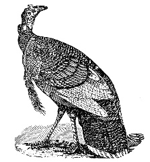
In the early 1970’s while Blackhawk was in its building stage, wild turkeys were introduced into local area. The goal was to populate these birds as “trophy prey” for archery hunters. Records show that turkeys were relocated from Texas. The wild turkey population has grown significantly into an “urbanized” problem.
Statistics show that these migrant birds are growing at an alarming rate. For example:
- As of 2017 there’s an estimated 250,000-300,000 wild turkeys in California.
- Northern California has 20% of the density population.
- The masses (known as “broods”) grow at the rate of 4% - 5% per year.
- Within ten years, predictions reveal that wild turkey numbers will top three-quarters of a million in California.
Without proper community planning, Blackhawk homeowners face exponential turkey growth and a growing financial challenge.
THE HABITAT AND THE PROBLEMS
Wild turkeys can be spotted grazing in open fields, hillsides and even private yards. For night time protection, they roost in tall trees and are capable of flying hundreds of feet at a time.) They are “predators” much like raccoons and invade private property seeking food especially bird feeders and scattered of corn from sympathetic residents. Some other problems to be aware of include:
- TURKEYS DO ATTACK humans and domestic pets.
- Turkeys fly atop parked autos and scratch exterior paint.
- Turkeys see their reflection sides of parked autos and aggressively peck at the car in turn damaging the paint.
- They fly atop roof tops and break roof tiles.
- They litter their waste on lawns, walks and drive ways paving the way for a biologically unhealthy Community environment.
- Originally wild turkeys were imported here to serve as a viable hunting resource. Often you hear Individuals claim they are “edible.” Local wild turkey meat can be diseased. Their meat is largely toxic because they routinely feed chemically laced on garden vegetation. Plus turkeys drink toxic water runoff to quench their thirst.
- Turkey hens with their chick broods invade nests and feed on quail eggs; thus depleting our the native quail population.
Wild turkeys are predators and a categorical nuisance within our Community; and predators clearly violate our Blackhawk CC&R statues. Hence, due to the increasing number of complaints from homeowners, Oakridge HOA, in cooperation with Blackhawk HOA have agreed to attempt to deplete the numbers of turkeys in Oakridge.
BLACKHAWK OAKRIDGE DEPREDATION LETTER
The following letter was mailed to all Oakridge residents on December 31, 2018.
“Over the past few years, Oakridge has experienced a rapid growth rate in the population of wild turkeys roaming within our community. The numbers of residential complaints regarding damage to parked vehicles, home rooftops, land scape and turkey waste have also risen. All of these concerns are taken seriously and, in this context, Oakridge Board agrees that immediate depredation steps are necessary.
Oakridge has been working with Blackhawk Homeowners Association to control certain community issues which includes reducing the numbers of turkeys that roam freely within our neighborhoods. Recently Blackhawk Homeowners Association decisively opted to continue funding this program with our help.
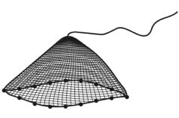
Beginning in early January, a team of authorized professionals who have been licensed with a depredation permit issued by the California Department of Fish and Wildlife will embark upon a program to survey the local turkey population, their migration patterns and develop an action plan of harmlessly removing the turkeys. You may witness members of this federally managed team scouting, filming and baiting area with feed in an effort to establish parameters for the placement of drop nets. Be assured this method provides humane and safe treatment for capturing the turkeys. The actual trapping process will not occur on private property, but preferentially in Blackhawk open space. If you have any questions, please contact Clifford Bates, Manager at cliff@jbahoa.com. “